

Internal vs External vs DMA Cheats: The Complete Guide to Hack Architecture
Since the release of the first competitive shooters, the software industry has come a long way — from primitive trainers to advanced hardware solutions. After CS2 transitioned to the updated engine and AI-powered anti-cheats were introduced, the rules of survival changed dramatically. When you’re grinding high ranks and opponents land perfect prefires with zero room for error — it stops being a game and turns into an exhausting test of your nervous system. Our team tests different software every single day and we know this pain all too well.
To start dominating, you need to understand the technical foundation. Most beginners choose software blindly, without knowing how exactly the code interacts with the game client. This usually leads to fast bans or brutal FPS drops. Today we’ll break down in detail the difference between Internal and External, which type of software to choose for safe play, and why traditional programming is giving way to hardware-level access. You’re on the professional Cheat.bz platform, which means you’ll get only hardcore facts — no fluff.
Table of Contents
- Quick Verdict — Internal, External or DMA?
- How Internal Cheats (.dll) Work and Why They’re Faster
- External Cheats (.exe): Delays, Overlays and ReadProcessMemory
- Comparison Table: Internal vs External vs DMA (2026)
- Aimbot Mathematics: Smooth and Dynamic FOV
- Hardware External (DMA Cheats) — Invisible at the Hardware Level
- Do VAC Live and Vanguard Ban Hardware Cheats?
- What Should You Choose in the End?
Quick Verdict — Internal, External or DMA?
If you want a fast answer, here’s the main difference. The fundamental distinction lies in the method of accessing data. An Internal cheat (.dll format) is injected directly into the game process: it runs with zero latency (0ms), enables powerful features like Silent Aim, but is aggressively detected by anti-cheats. An External cheat runs as a separate process outside the operating system, drawing a transparent overlay on top of the game window. It’s much safer, but it reduces your frame rate.
The absolute leader in the current meta is hardware-based external software (DMA boards). Reading happens at the hardware level with data transferred to a second computer, making the gameplay virtually immune to client-side checks.
How Internal Cheats (.dll) Work and Why They’re Faster
Let’s break down why professional developers love Internal cheats. As soon as you launch the injector, the .dll file is injected straight into the game’s address space. For a coder, this means complete control over the engine. This is Internal architecture, where the software literally becomes part of the game itself.
The advantages of this approach are:
- Zero latency (0ms): The cheat doesn’t waste time copying data back and forth. Calls go directly.
- Deep functionality: Only Internal cheats can hook virtual methods (VMT), modifying UserCmd packets sent to the server. This makes features like Silent Aim, Skinchanger and Desync AA possible.
- High FPS: ESP rendering happens through the game’s native graphics API (DirectX or OpenGL) without creating resource-heavy third-party windows.
But here’s the critical downside. Anti-cheats like Vanguard or Faceit AC scan the game’s memory in real time. Having a foreign module inside the game process is a red flag. If you use a public free Internal cheat in CS2, you’re guaranteed to get Red Trust within a couple of hours. Losing an account with skins costs dozens of times more than a private subscription, which is why we strongly recommend checking our reliable guarantees and security protocols before any injection.
External Cheats (.exe): Delays, Overlays and ReadProcessMemory
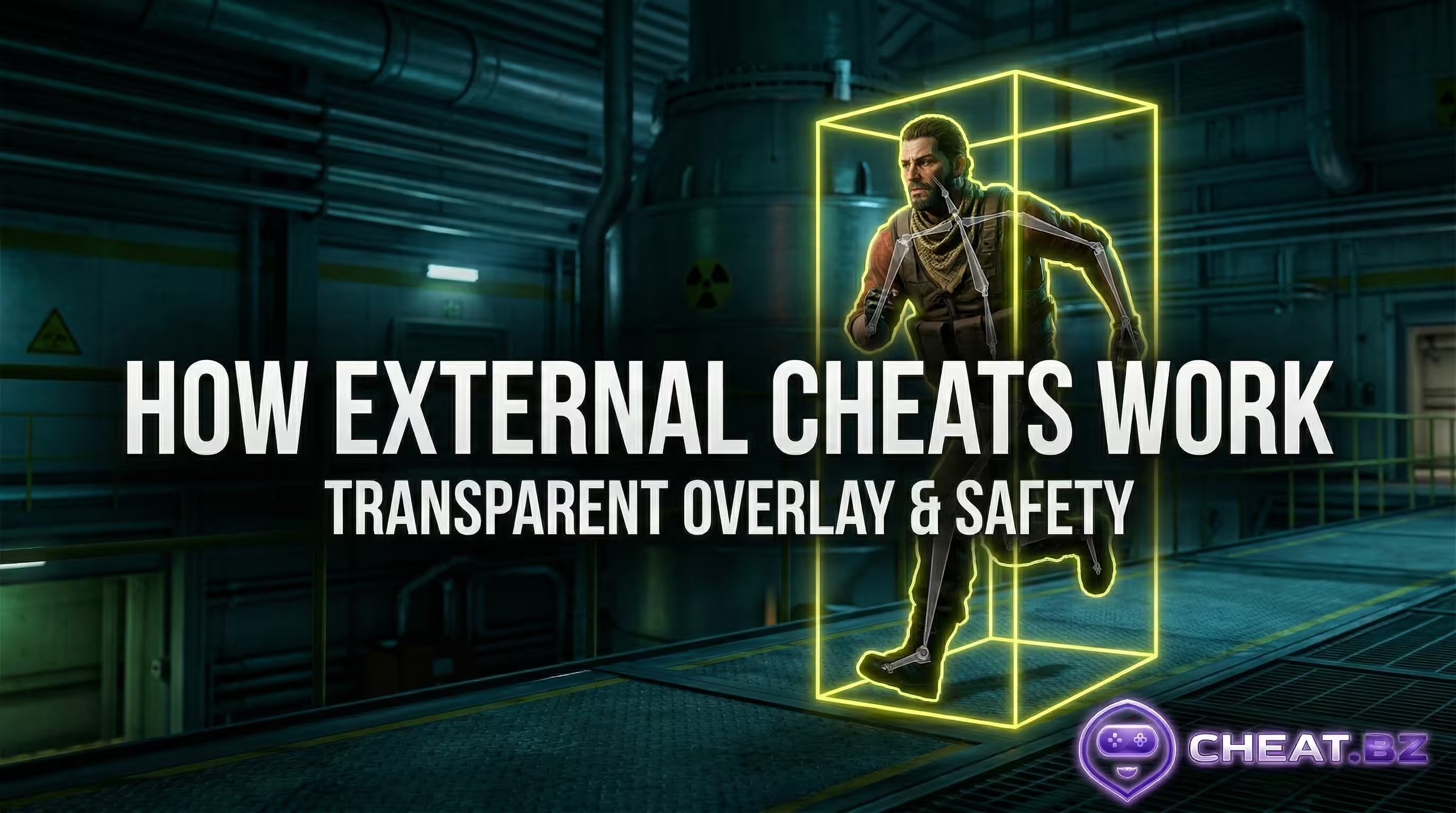
If injection is so dangerous, why not read data from the outside? External cheats (usually .exe format) do exactly that. It’s a completely independent application. The main advantage is that the software doesn’t touch the game process with its own files — it simply “looks” into the RAM.
To do this, the external hack calls the Windows system function ReadProcessMemory (RPM). Reading is done through a special system handle. While Internal lives inside, External works from the outside — and that’s exactly what makes them fundamentally different.
But there are nuances you need to know about:
- FPS drop: To draw WH, External cheats create an invisible window (Overlay) on top of the screen’s memory space. Windows uses Desktop Window Manager (DWM) to render it, which can eat 10% to 30% of your frames.
- Delays (Input Lag): Copying data through ReadProcessMemory takes milliseconds. ESP can lag slightly behind real models during fast mouse turns.
- Write risk: Reading is relatively safe. But for the Aimbot to work, the software needs to write to memory (WriteProcessMemory function). Writing to memory from another process is easily intercepted by anti-cheat drivers (Ring-0 ObCallbacks), leading to a ban.
Comparison Table: Internal vs External vs DMA (2026)
For clarity, we tested all three architectures in the current meta. Here’s an honest summary of the pros and cons of each cheat type.
| Criterion | Internal (.dll) | External (.exe) | Hardware DMA (PCIe) |
|---|---|---|---|
| Performance (FPS) | Perfect (no loss) | Drops by 10-30% due to overlay | Perfect (render on Radar PC) |
| Memory Access | In-process injection | RPM/WPM calls | Direct hardware access |
| Detection Risk (Vanguard/EAC) | High (bypass required) | Medium (overlay) | Minimal (CFW) |
| Aimbot Type | Engine (Silent, Vector) | Mouse Event (mouse simulation) | Hardware (KmBox B Pro) |
Aimbot Mathematics: Why Smooth and Dynamic FOV Work Differently
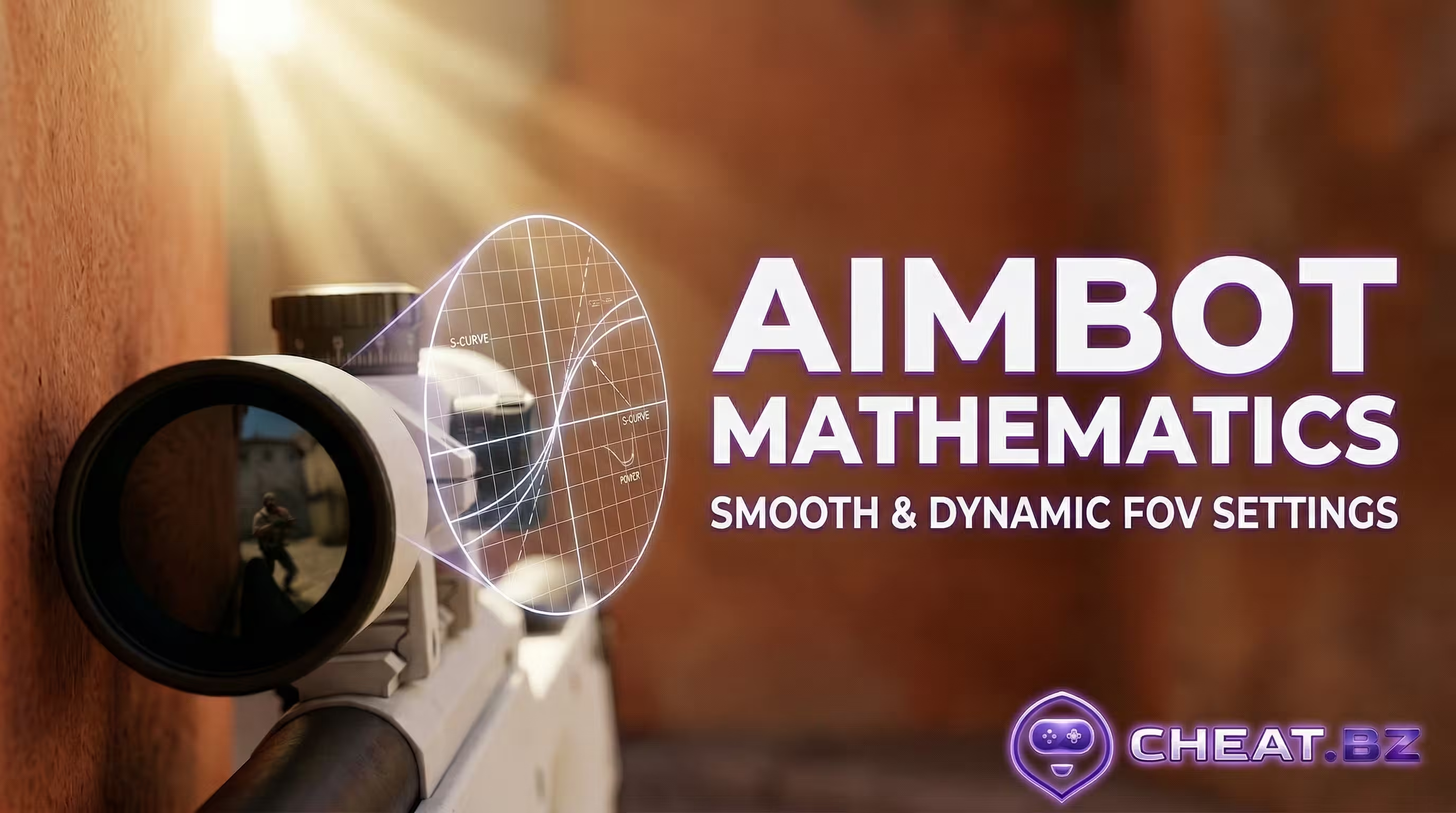
Many people mistakenly think that Aimbot works the same in every software. In reality, External and Internal cheats use completely different math. In Internal hacks, the aim changes the player’s view angles (ViewAngles) directly inside the engine packets. This allows perfect Smooth (smoothness) without losing accuracy.
External cheats are forced to use workarounds. Since they can’t safely change angles inside the engine, they call the system function mouse_event (or its analogs), making Windows think the player moved the mouse themselves. This programming requires complex interpolation algorithms (Spline/Bezier curves) to fool the server anti-cheat. If Smooth is set incorrectly, the crosshair will jitter and the AI system will instantly flag suspicious activity.
This is exactly why, while newcomers scroll through yougame.biz looking for answers about why their external WH and Aim lag, experienced users switch to more advanced systems. By the way, visual features are something external hacks handle perfectly if you only need a radar or Loot ESP.
Hardware External (DMA Cheats) — Invisible at the Hardware Level (PCIe)?
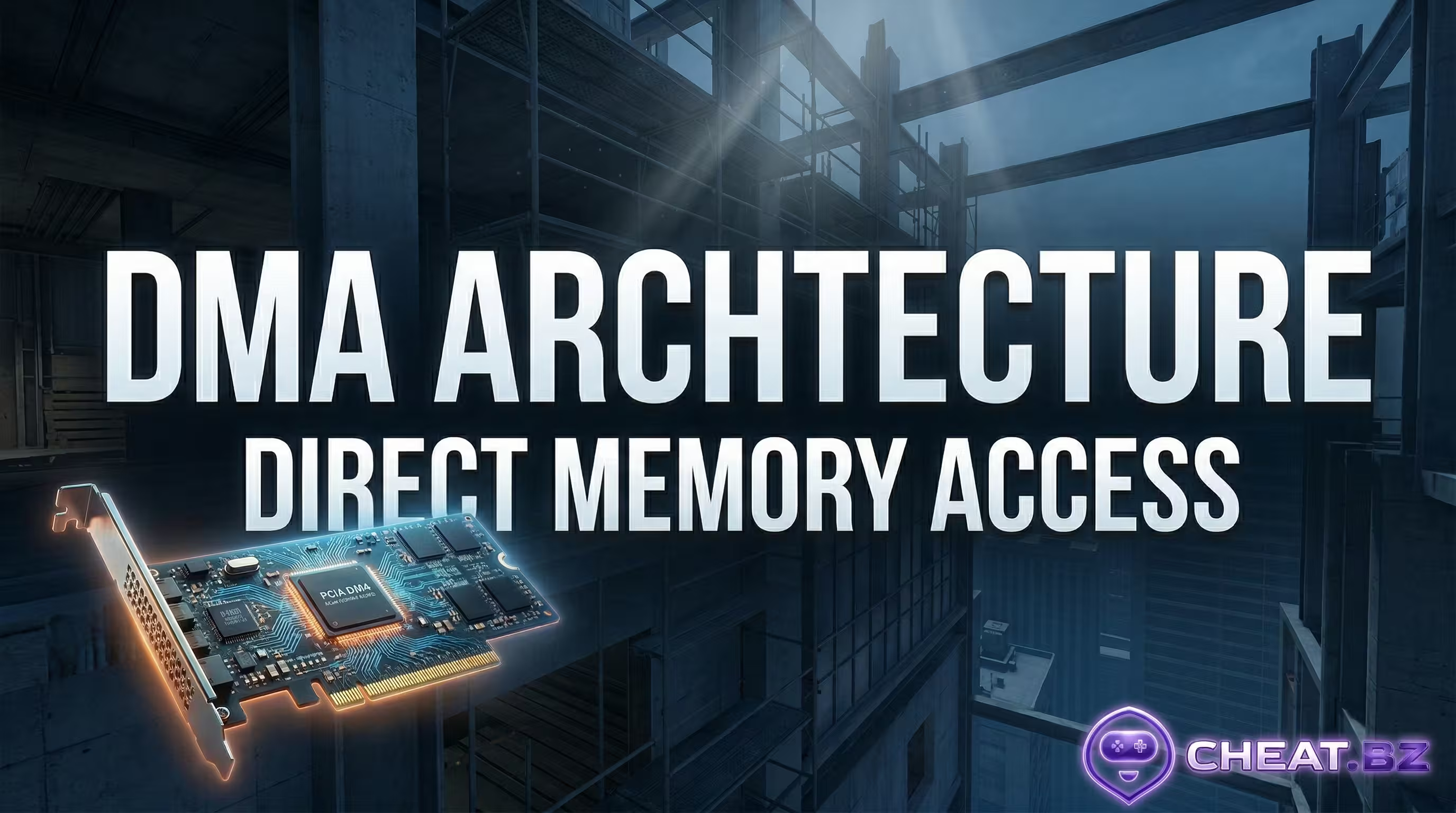
Our cheat website offers cutting-edge solutions, and in 2026 the pinnacle of architecture is DMA boards (Direct Memory Access). This is the ultimate External. Development has moved beyond software code. You insert a physical board into the PCIe slot of your gaming PC, and it reads RAM at the hardware level, sending data over USB to a second computer (Radar PC).
How the perfect setup works:
- Hardware installation: The DMA card is installed in the gaming PC. For the anti-cheat, it is masked as a harmless device (for example, a Wi-Fi adapter) using a unique custom firmware (CFW).
- Memory reading: The radar PC (a lightweight laptop) receives the memory dump and renders ESP.
- Hardware Aimbot: KmBox B Pro is connected for hardware mouse emulation, allowing the Aimbot to work completely undetected by the gaming PC’s OS.
- Graphics streaming: Fuser (HDMI mixer) overlays the image from the radar PC onto the main monitor without any software overlay (100% Streamproof).
Ring-0 anti-cheats physically cannot see this magic because access bypasses the central processor. If you have trouble building such a setup, you can always contact our technical support and we’ll help you configure the loader and hardware.
Do VAC Live and Vanguard Ban Hardware (DMA) and External Cheats?
Let’s be realistic. No software gives 100% immortality. A $150 board by itself is useless without good firmware. In the first quarter of 2026, FACEIT ran a massive detection wave on public CFW by tracking TLP packet anomalies (Master Abort logs). Cheap cheats get banned just as fast as free public ones.
Additionally, the VAC Live system in CS has been completely revamped. The server-side VAC now analyzes behavior (SteamGPT). It doesn’t matter whether the software runs as a dynamic library (DLL) or you’re using an expensive DMA board. If the gameplay is accompanied by inhuman reaction times (Reaction Time 0-150ms) and perfect wall tracking, the neural network will cancel the match and send the account to a permanent ban. You have to play smart (Legit).
What Should You Choose in the End?
While other players spend hours grinding ranks and losing elo because of toxic teammates and cheaters, you can take full control of the match. If you need maximum functionality with beautiful visuals (Skinchanger, spinner) — go for a quality Internal, but be prepared for regular protection updates. If your priority is long-term play on your main account with minimal interference — choose External. And for paranoids and hardcore players with expensive skins, there’s only one path — DMA architecture.
Stop tolerating losses. Check out our catalog of supported games and pick private software that will solve your server problems today. A quality website and reliable software pay for themselves with saved nerves on day one.