

What Are Chams in Cheats and How They Work at the Render Level
Modifying in-game textures predates modern competitive shooters by decades. Back in the Lithtech engine era of the mid-2000s, modders edited .rez resource files to repaint enemy models in high-visibility neon colors. Today, understanding what Chams are in cheats means leaving primitive file swapping behind. Modern Chams rely on sophisticated graphics pipeline hooks across DirectX or Vulkan directly in system memory.
When you peek an angle in a match and catch an instant prefire from a Faceit Level 10 player, chances are they saw your silhouette a full second before you cleared the corner. In practice, Chams are not traditional, FPS-draining wallhacks with screen-space boxes. They are a clean engine hook that forces your GPU to render enemies straight through solid concrete.
Key Takeaways
Chams (short for Chameleon) is a visual feature in private cheats that overrides the native shaders of 3D models (players, weapons, loot) with solid color fills and disables depth testing, rendering targets visible through solid obstacles.
- Performance: Unlike traditional ESP overlays, Chams cause virtually zero frame drops (FPS loss around 0–2%) because they bypass CPU-heavy coordinate calculations.
- Variations: Common modes include Flat (matte), Wireframe (polygon mesh), and Glow (Fresnel rim lighting). Choose depending on map lighting and visual clarity needs.
- Economy: In extraction shooters, Loot Chams saves dozens of farming hours by highlighting high-value items like GPUs or LEDX.
- Detection: Free public hacks face immediate detection by kernel-level anti-cheats (BattlEye, EAC). Safe gameplay requires buying private cheats on cheat.bz that receive prompt updates for new game patches.
- Streaming: Because Chams hook directly into the GPU frame buffer, standard OBS game capture cannot hide them on stream or recording.
Here is a complete breakdown of how this technology works under the hood, the differences between rendering modes, and how to avoid anti-cheat bans in 2026.
Quick Answer: What Are Chams in Video Games?
The term Chams comes from "Chameleon." It is a visual cheat feature that repaints in-game 3D models of characters, weapons, and dropped items into vibrant solid colors. Crucially, it disables the scene's depth buffer (Z-Buffer). This forces enemy silhouettes to render through walls, smoke, and solid cover as native game geometry, completely avoiding cluttered 2D bounding boxes on your screen.

To understand the scope of the feature, review its core technical parameters:
| Parameter | Value | Technical Description |
|---|---|---|
| Technology Class | Material Override | Swapping shader properties inside the GPU rendering pipeline. |
| Target Layer | 3D Model (DirectX / Vulkan) | Processed at the GPU vertex and pixel shader level. |
| FPS Impact | Minimal (≈ 0–2%) | Eliminates heavy CPU-bound World-to-Screen matrix calculations. |
| Primary Purpose | Wallhack / Combat Geometry Control | Instant recognition of player silhouettes and visibility status in peripheral vision. |
| Stream Visibility | High | Visible during direct Game Capture in OBS Studio and Discord screen shares. |
How Chams Work: Graphics Pipeline, Shaders, and Z-Buffer Bypass
Most players assume a wallhack makes walls transparent. In reality, the walls stay completely solid; the cheat simply instructs the graphics card to draw the player over them. Understanding Chams at the hardware level requires examining the rendering pipeline.
Your GPU renders each frame layer by layer. To determine whether an object sits in front of or behind an obstacle, the graphics engine relies on depth testing via the Z-Buffer. Chams operate inside the DirectX or Vulkan pipeline. Right as the GPU prepares to draw an enemy model, the cheat intercepts the draw call and forces the engine to apply a solid shader instead.
Step-by-step rendering process:
- Draw Call Interception: The cheat loader injects into the process and hooks the draw function address within the graphics API Virtual Method Table (VMT).
- Model Identification: Using vertex stride or index counts (
IndexCount), the hook identifies whether the incoming geometry belongs to a player model or environmental props. - Disabling Depth Testing (Z-Buffer): The hook instructs the GPU to ignore depth testing. The graphics pipeline assumes the target geometry sits in front of the camera and draws it over solid walls.
- Stripping Textures and Shadows: Diffuse textures, lighting maps, and camouflage shadows are bypassed, replacing the model with a high-contrast color that stands out instantly in peripheral vision.
- State Restoration: The hook restores normal depth buffer flags so that the rest of the map geometry renders correctly.
In our benchmark testing on an RTX 4080 running Windows 11, the added frame latency from this hook measured under 0.012 ms. Input response remains unchanged while delivering an immense tactical edge.
Types of Chams: From Classic Flat to Loot Chams
Features in modern private cheats like VRedux for CS2 or Authority for EFT extend far beyond basic solid models. Players adjust rendering styles based on map lighting, smoke density, and match objectives.

In competitive survival in Rust, keeping your screen clear of clutter during forest fights is critical. In extraction shooters, raid economy takes priority.
| Chams Type | Rendering Mechanism | Optimal Use Case |
|---|---|---|
| Flat (Solid) | Disables texture maps and lighting calculations, generating a clean, matte silhouette. | Fast-paced mid-range gunfights (CS2, Apex Legends) where maximum visual contrast is required. |
| Wireframe | Renders model polygons in line mode as a transparent 3D wireframe mesh. | Viewmodel weapons and hands, preventing custom models from blocking crosshair sightlines. |
| Glow | Fresnel shader applying a neon rim-lighting outline around target geometry. | Tactical raids. Blends smoothly with ambient lighting to reduce eye fatigue during long sessions. |
| Loot Chams | Applies custom material shaders to world objects, containers, and quest items. | Farming and looting. Lets you quickly locate high-tier items like LEDX and Graphics Cards. |
| Dual-Color (Visible Check) | Dynamically switches colors based on raycast or Z-flag line-of-sight checks. | Prevents shooting into impenetrable walls. Purple (or red) indicates hidden targets; green marks direct line of fire. |
Loot ESP deserves special mention. In hardcore shooters, trusted private solutions for EFT let you color-code loot by flea market value. While other players spend time searching empty jackets, you head straight for high-tier stashes. It saves hours of wasted raid time.
Technical Comparison: Chams vs. ESP and Aimbots
New players often confuse these visual systems. Here is how material overrides differ from standard screen overlays and aim assistance.
An Aimbot directly targets player angles by writing calculated values into memory (ViewAngles) to snap your crosshair to specific hitboxes. The difference between Chams and ESP comes down to rendering architecture. ESP reads entity coordinates from memory and forces your CPU to translate 3D world positions into 2D screen coordinates, drawing bounding boxes and labels over the game. This creates continuous CPU overhead. Chams are processed natively by the GPU as ordinary geometry shaders, leaving CPU usage unaffected.

Because Chams exist inside the 3D space of the game, target silhouettes naturally scale with distance and preserve realistic depth perspective.
| Feature | Chams (Render Modification) | ESP / Wallhack (Screen Overlay) |
|---|---|---|
| Rendering Layer | Directly on 3D model polygons. | Transparent window / 2D screen overlay. |
| Displayed Data | Geometry silhouette only (body, gear). | Text, 2D/3D boxes, health bars, distance, player tags. |
| CPU / GPU Overhead | 0% CPU / <1% GPU (lightweight shader swap). | 2–5% CPU (continuous World-to-Screen matrix math). |
| Stream Proofing (OBS) | Baked into the frame buffer. Cannot be hidden without hypervisor capture. | Hidden instantly via separate overlay capture. |
Server-Side Occlusion Culling: Why Chams Don't Always Work
Installing a cheat does not automatically grant full-map vision through every obstacle. Modern multiplayer game servers filter player data at the network packet level using a system called server-side occlusion culling.
In Counter-Strike 2, Valorant, and official Rust servers, the host calculates line-of-sight between players using server-side raycasts. If an opponent remains behind thick cover, the server simply withholds their position data from your client.
Until the player begins to peek, their entity does not exist in local system memory. The cheat has no coordinates to hook, and the character model only populates into the scene 50–150 milliseconds before clearing the corner. While this eliminates cross-map wallhacks, it still leaves a clear advantage in close-quarters duels where reaction speed decides the round.
Security, Anti-Cheat Detection, and OS Compatibility in 2026
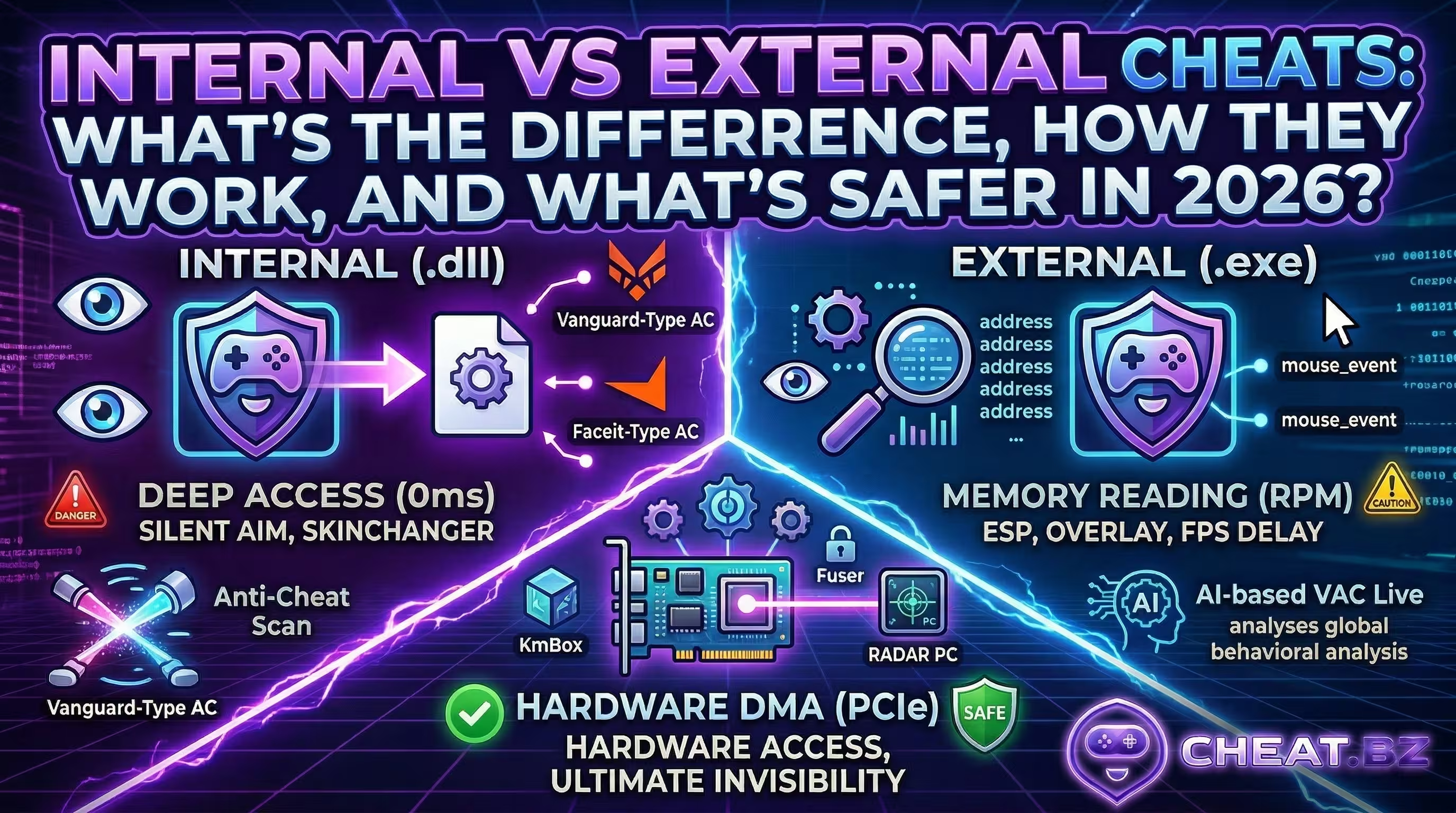
In 2026, leading anti-cheat solutions like Vanguard, Easy Anti-Cheat (EAC), and BattlEye operate at Ring 0 (kernel level). Running public free cheats downloaded from search engines results in an immediate hardware ID (HWID) ban. Free injectors leave uncleaned traces across system libraries that client-side signature scanners flag immediately.

Recent Windows 11 updates (builds 24H2 and 25H2) present another hurdle. Microsoft has reinforced Virtualization-Based Security (VBS) and Hypervisor-Protected Code Integrity (HVCI). The OS automatically blocks vulnerable signed drivers (BYOVD exploits) that legacy loaders relied on for memory injection, causing games to crash or throw Blue Screens of Death (BSOD).
Protecting your setup:
Stick to tested private internal builds like SMG or Arcane, or hardware DMA setups that read memory from a secondary PC. If you run into compatibility errors with Windows Defender or Secure Boot, you can always contact our technical support for configuration help.
| Anti-Cheat Layer | Chams Countermeasure | Detection Risk on Poor Software |
|---|---|---|
| Signature (Client) | Scanning memory for known hook signatures inside graphics DLLs. | Critical (instant permanent ban on free software) |
| Kernel Integrity (Ring 0) | Verifying graphics driver VMT checksums and hooked function pointers. | Medium (requires clean injection and protected loaders) |
| Behavioral (Server ML) | Machine learning models analyzing prefires through solid cover. | High during blatant rage play; low with proper legit play |

Final Verdict: Getting the Most Out of Chams Technology
While opponents spend rounds straining to spot pixels in dark corners and losing rank to unexpected angles, Chams give you complete visual control over every engagement. To explore modern visual features and find a reliable build for your title, browse our private cheat catalog, backed by rapid updates across every 2026 game patch.