

All CS2 Modes — Premier, Competitive, Wingman, DM, and More
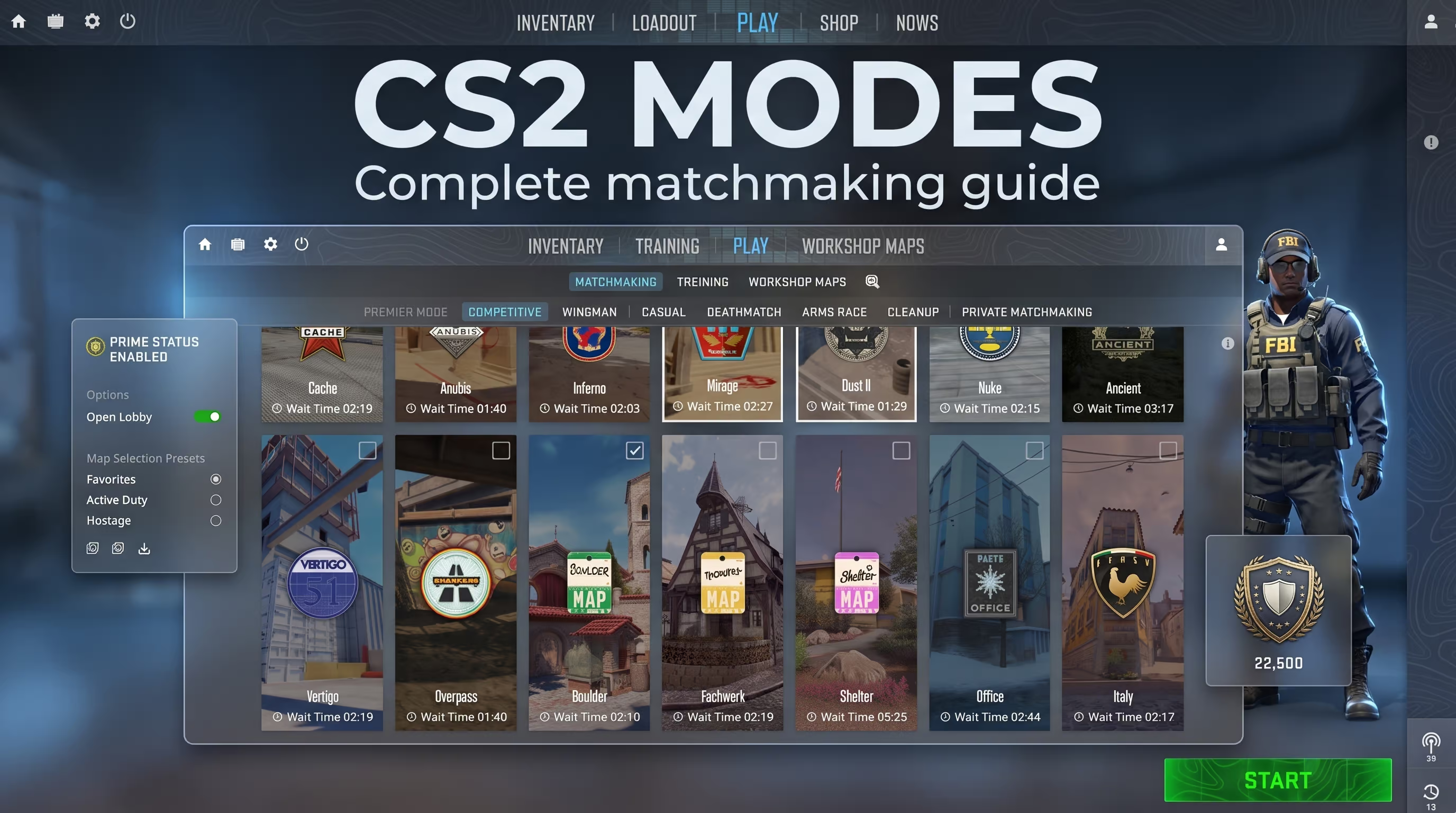
The transition of the Counter-Strike franchise to the Source 2 engine completely reshaped the matchmaking landscape we all knew. After the game's release, both hardcore grinders and casual players ran into the same confusion: where did the old Global Offensive formats go, how does calibration work now, and why do you get different ranks on different maps? Honestly, our team burned through countless hours dissecting subtick architecture changes and matchmaking logic to pull all the current data into one place.
In this guide, put together by the experts at cheat.bz, we'll tear down every available mode in CS2 bolt by bolt. You'll learn how the current meta works, why Valve split the ranking system in two, and which game mode to pick for aim training versus a serious ELO grind. No fluff — just a clean, factual breakdown for the current season.
TL;DR — The Essentials
Counter-Strike 2 officially ships with 6 core game modes, each with its own unique matchmaking rules and economy.
- Current lineup: The game features Premier, Competitive, Wingman, Casual, Deathmatch, and Arms Race.
- The esports standard: Premier mode in CS2 uses an open numerical rating (CS Rating from 0 to 30,000+) and a map veto system, making it the definitive 5v5 format.
- Map pool update: On July 6, 2026, Season 5 kicked off — the legendary map Cache returned to Active Duty, permanently replacing Overpass.
- Time economy: All core competitive matches now run on MR12 — you need 13 rounds to win, cutting average match time down to 40–45 minutes.
- Customs and training: Beyond Valve's official servers, players have access to Workshop maps, private matchmaking for playing with friends, and community servers.
Let's break down every game mode in detail so you know exactly where to warm up and where to sweat for that rank.
All CS2 Modes in One Table — Quick Reference
For those who don't want to scroll through walls of text, we've packed the essentials into a single matrix. Compared to digging through wikis or patch notes, this table gives you an instant read on the entire Counter-Strike 2 ecosystem.
| CS2 Mode | Format | Rounds | Rating | Requirements | Match Duration |
|---|---|---|---|---|---|
| Premier | 5v5 | MR12 (first to 13) | CS Rating (0–30,000+) | Prime + Profile Level 10 | ~45–60 min (OT possible) |
| Competitive | 5v5 | MR12 (first to 13) | Per-map ranks | Profile Level 2 | ~40–45 min (draw at 12:12) |
| Wingman | 2v2 | First to 9 (max 16 rounds) | Separate ranks (Wingman) | None | ~10–15 min |
| Casual | 10v10 | First to 8 | No rating | None | ~15–20 min |
| Deathmatch | FFA (Free-for-All) | Time-based | No rating | None | Exactly 10 min |
| Arms Race | FFA | Frag race | No rating | None | ~5–7 min |
Premier Mode in CS2 — The Premier Esports Format
If you want to compete at a serious level, this is where you need to be. Premier is the ultimate competitive experience, and Valve positions it as a direct replacement for third-party platforms like FACEIT. There are no traditional rank icons here — instead, you get a transparent, open ELO system.
Matches run in a 5v5 format under MR12 rules. That means each half lasts 12 rounds, and a team needs 13 to close it out. Here's the kicker: if the score hits 12:12, the game doesn't end in a draw. Overtime kicks in (first to 16), which adds insane tension to the late game. When studying Counter-Strike 2 mechanics, it's critical to understand that the economy here demands tight team coordination — a blown force buy can cost you an entire half.
How CS Rating and Calibration Work
CS Rating is a transparent numerical system ranging from 0 to 30,000 points. Every thousand-point bracket has its own color, visually reflecting your skill level:
- Gray: 0 – 4,999 (Silver equivalent, starting league).
- Light Blue: 5,000 – 9,999 (Mid-tier, Gold Nova range).
- Blue: 10,000 – 14,999 (Advanced players, AK tier).
- Purple: 15,000 – 19,999 (High-level tactical play, Star/Big Star range).
- Pink: 20,000 – 24,999 (Supreme tier, semi-pro).
- Red/Gold: 25,000 – 30,000+ (Global Elite, server royalty).
To get your first number, you need to grind out 10 calibration wins. After that, a win typically nets you +100 to +300 points, while a loss costs you -100 to -200 (at higher ranks, losses can hit -500).
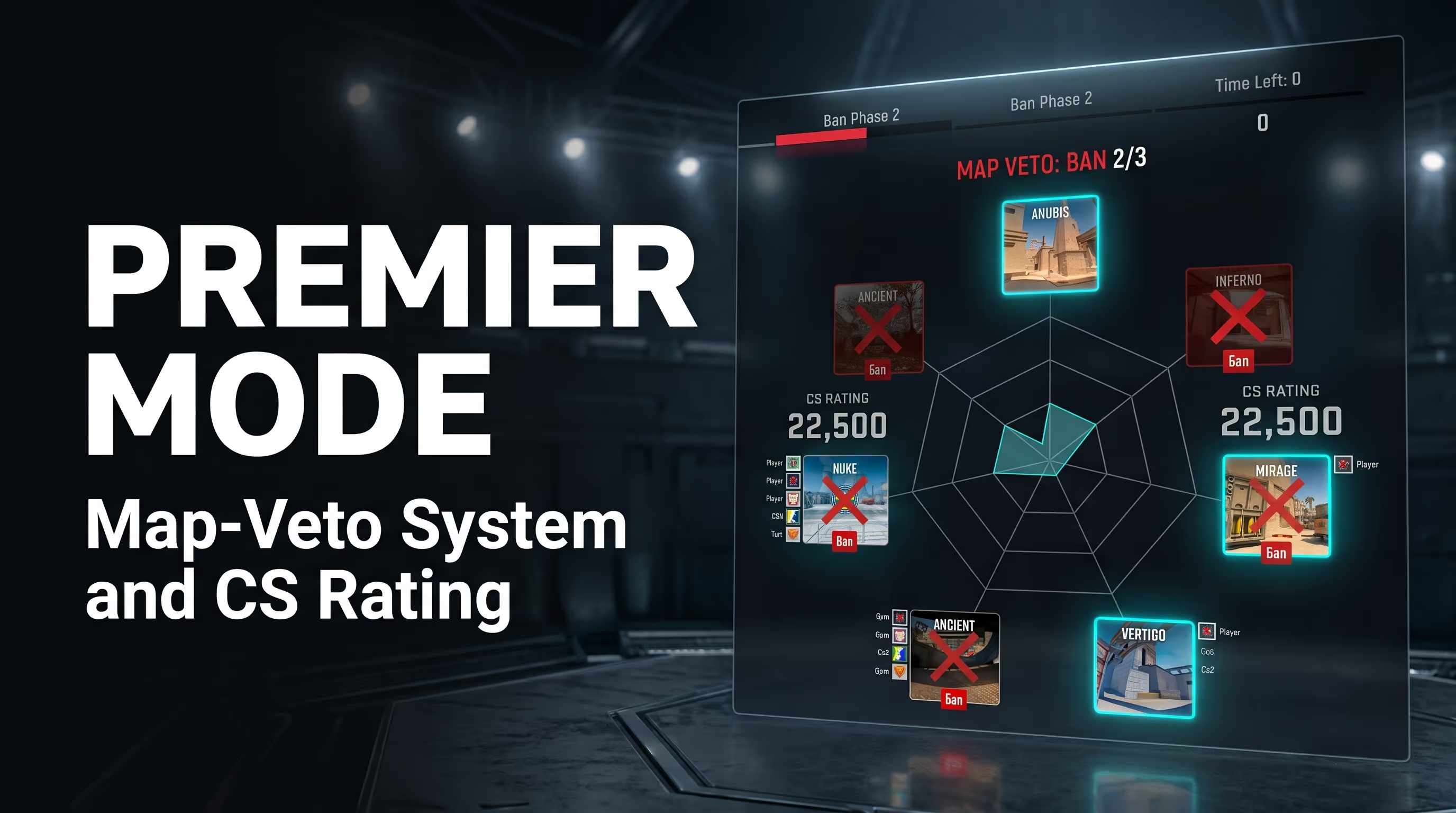
Map Veto in Premier: How Pick/Ban Works
Unlike regular matchmaking, you can't just queue your favorite Dust2 or Inferno. Every match starts with a ban phase from the current Active Duty pool. As of Season 5 (starting July 2026), the pool consists of 8 maps: Mirage, Nuke, Inferno, Dust2, Ancient, Vertigo, Anubis, and the returning Cache.
Here's how it plays out: Teams take turns banning maps from the Active Duty pool until one remains. The team that loses the pick chooses which side (CT or T) they'll start on.
How to Unlock Premier Mode and When Seasons End
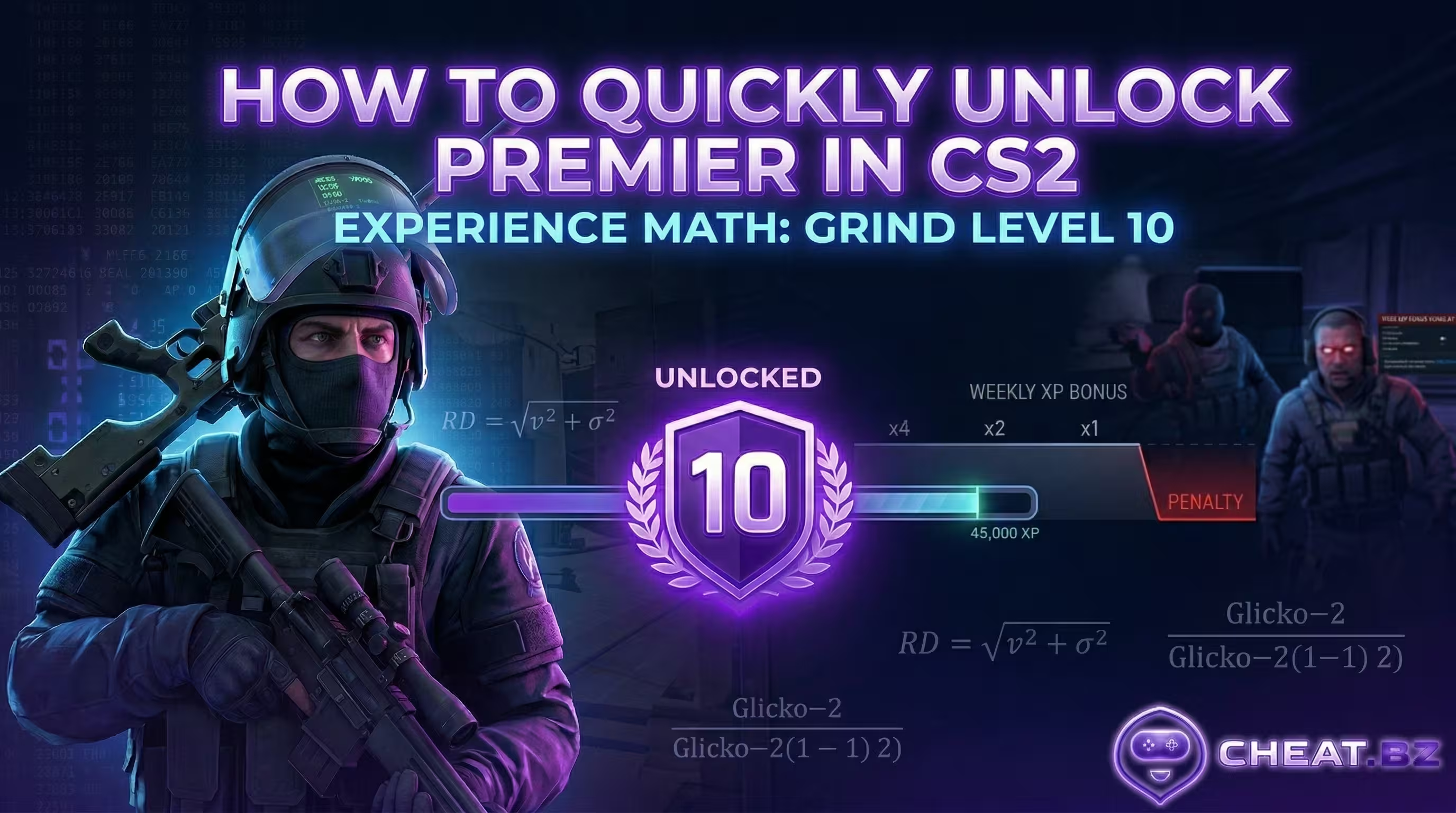
A lot of newcomers wonder why the Premier button is grayed out. Valve locked this mode down hard to combat smurfs and toxic players. To unlock Premier in CS2, you need to meet two conditions:
- Buy Prime Status ($14.99 on Steam) or carry it over from your CS:GO account. Without Prime, the door to competitive play is permanently shut.
- Reach Profile Level 10. This means grinding through a fair amount of Casual and DM matches. And while some players burn dozens of hours on tedious XP farming against newbies, smart players delegate that grind to dedicated CS2 software so they can jump straight into ranked matches.
People often ask when the Premier season ends in CS2. Valve moved the game to a seasonal model. For example, Season 4 officially wrapped up on July 6, 2026, followed by a soft rating reset and the launch of Season 5. Season transitions typically happen every six months and come with an Active Duty map rotation (like the Overpass-to-Cache swap).
Competitive in CS2 — A Classic with New Rules
If Premier is the hardcore esports arena, then classic Competitive in CS2 has become a solid proving ground for drilling specific map locations. Here you can check only Inferno and spam it endlessly. Matches also run 5v5 under MR12, but with one critical difference: at 12:12, the match ends in a draw. No overtime here.
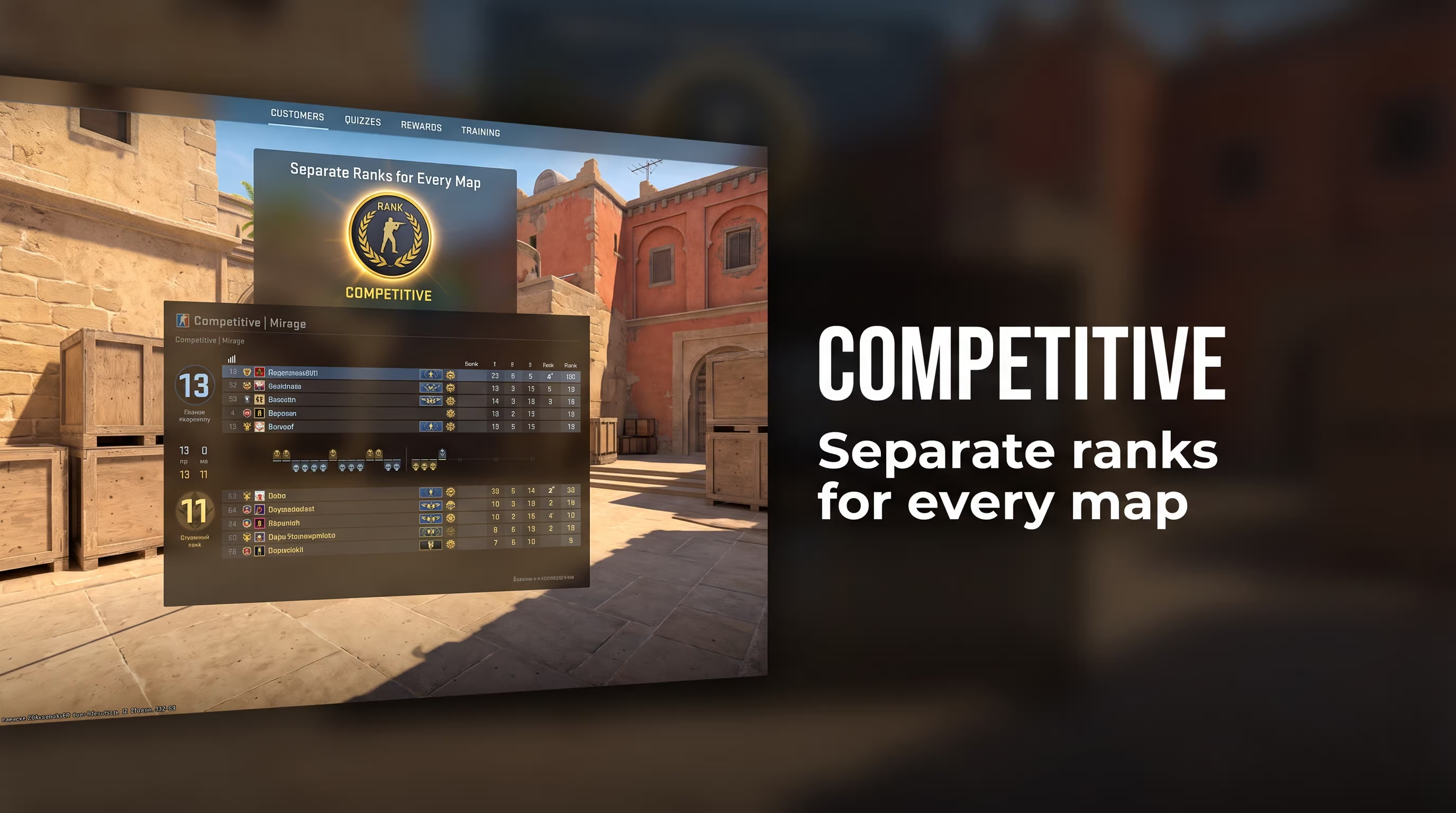
Per-Map Ranks: How the Ranking System Works
The standout feature of the revamped Competitive mode is separate ranks per map. You no longer get a single account-wide rank. Now you can rock Global Elite on Mirage because you know every pixel, while sitting at Silver I on Vertigo if it's your first time playing it. The game retains all 18 classic Counter-Strike ranks. To calibrate on a specific map, you need 2 wins on it.
Competitive vs. Premier — Side-by-Side Comparison
In our testing, we noticed that a lot of players still mix up these two formats. Let's lock in the differences:
| Parameter | Premier Mode | Competitive |
|---|---|---|
| Rating System | Unified CS Rating (0 – 30,000) | 18 classic ranks (separate per map) |
| Map Selection | Map veto (Pick/Ban before match) | Player selects map pool before queue |
| Overtime | ✅ Yes (first to 16 at 12:12) | ❌ No (match ends in a draw) |
| Unlock Requirements | Prime Status + Profile Level 10 | Profile Level 2 minimum |
| Leaderboard | Global and regional leaderboard | None |
Wingman in CS2 — Tactical 2v2 Action
For those who only have one reliable duo partner, Valve kept Wingman in CS2. This is an ultra-fast 2v2 format played on compact, trimmed-down versions of classic maps (for example, only one bombsite is available on Nuke or Inferno).
The economy is stripped down, and matches last a maximum of 16 rounds (first team to 9 wins). Wingman is perfect for drilling duo nades, practicing clutches, and quick XP farming. Ranks here are separate from Competitive but use the same classic progression from Silver to Global.
Casual Mode in CS2 — Your Gateway into the Shooter
Casual is the sandbox where 10v10 chaos reigns supreme. This mode exists so newcomers can get comfortable with gunplay without wrecking their team's economy. Friendly fire is disabled, and teammate collision is turned off.
At the start of every round, armor and a helmet are handed out completely free, and CTs automatically receive a Defuse Kit. Kill rewards are halved, and matches only run to 8 round wins. It's the ideal spot to grind out that all-important Level 2 needed to access competitive matchmaking.
Deathmatch in CS2 — Non-Stop Aim Training
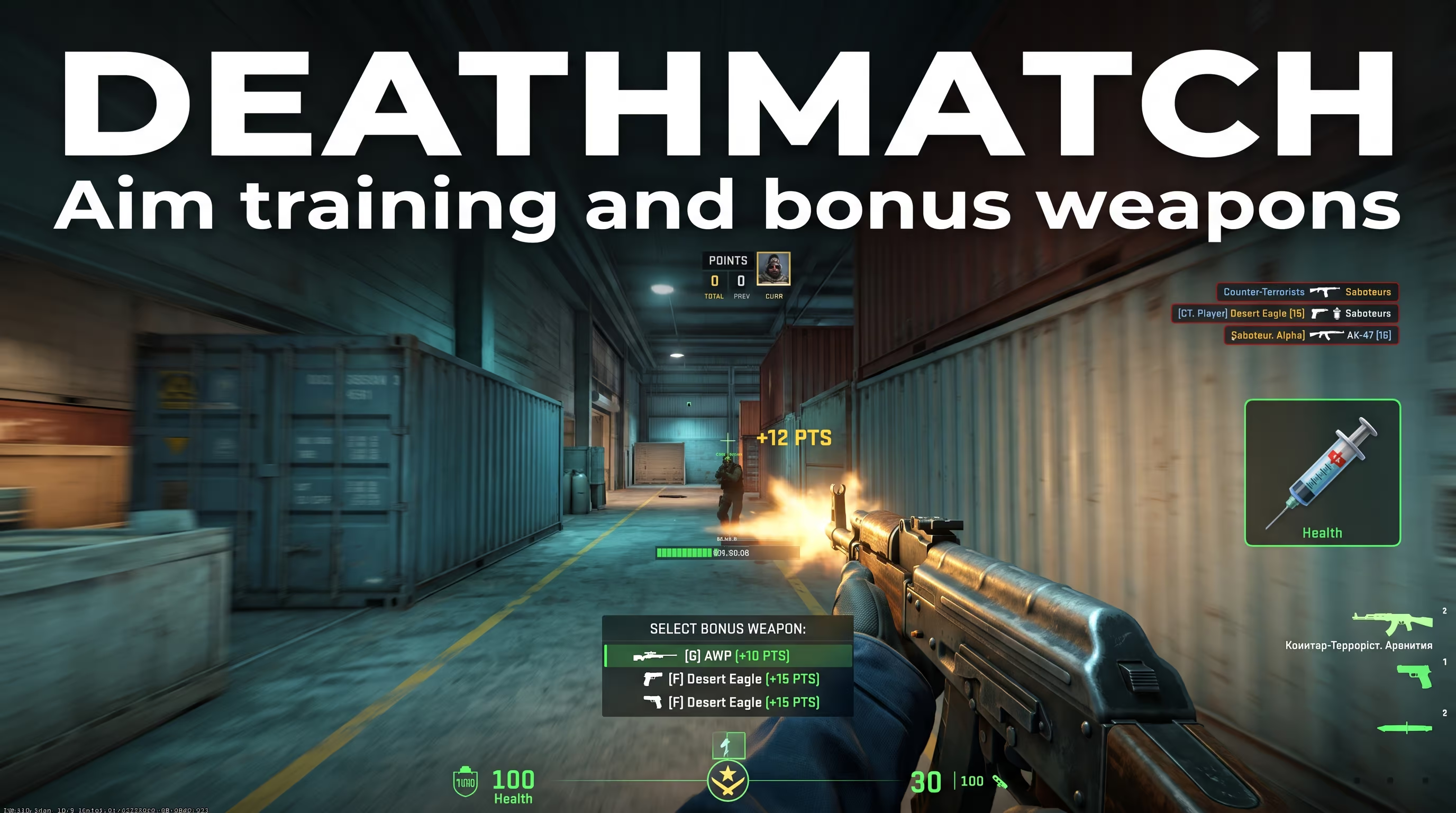
When you notice your aim slipping and your spray going wide — it's time to fire up Deathmatch. This is the classic FFA (Free-for-All) shooter format: no teams, enemies spawn all over the map immediately after you die. Each round lasts exactly 10 minutes.
You can buy any weapon for free the moment you respawn, and armor is granted automatically. The mode's signature twist is the bonus weapon: every few dozen seconds, the game prompts you to pick up a specific gun (say, a shotgun or an SMG). Kills with it award bonus points. Every third consecutive kill without dying grants a health shot that restores 50 HP. From our team's experience, 15–20 minutes of focused DM before ranked is critical for getting your hands back into micro-control and spray patterns.
Arms Race — Chaos and Weapon Progression
Arms Race made a triumphant return with the major "A Call to Arms" update (2025). The format traces its roots back to the legendary Gun Game from CS 1.6. It's a fast-paced FFA where you don't buy guns — every two frags automatically upgrades your weapon.
Players start with powerful rifles and work their way down to pistols as they rack up kills. There are 17 progression levels in total. The final stage? A kill with the golden knife. Whoever lands that knife kill first instantly wins the match. Fights take place on dedicated compact maps: ar_baggage, ar_shoots, and the iconic Pool Day.
Private Matchmaking and Practice
Sometimes you don't need random teammates — you just want to test smokes, run a 1v1 with a friend, or host a clan war. That's what the private lobby system in CS2 is for.
How to Create a Private Lobby and Play 1v1
To face off against a friend without outsiders, you'll use private matchmaking. Here's a step-by-step setup:
- In the main menu, click "Play" and switch to the "Practice" tab.
- Toggle the options on the left: enable "Infinite Ammo" and "Grenade Trajectory" (if needed), and uncheck "Competitive."
- Launch a map. Open the console (the ~ key).
- Type
bot_kickto remove all bots. - For a quick warmup, enter
mp_freezetime 0andmp_roundtime 60. - Type
statusin the console, copy your IP address, and send it to your friend. They need to enterconnect [your IP]to join.
Practice Mode: Bots, Infinite Ammo, and Nade Lineups
Practice mode (Training) is an offline server that runs locally on your PC. Here you can test any wallbangs and nade timings without the fear of getting killed. Valve added a solid UI for this mode: you can now enable the grenade trajectory camera directly in the lobby settings, no complex console commands required. It's an indispensable tool for learning new positions on Cache.
Where Did Danger Zone, Flying Scoutsman, and Other CS:GO Modes Go?
Many Global Offensive veterans, after updating their client, ask the obvious question: where's the Battle Royale and the competitive hostage rescue mode? Honestly, the reality is harsh.
Valve officially did not port Danger Zone, Flying Scoutsman, or Demolition to the Source 2 engine. Dataminers found leftover survival-related files in the game's code, but as of July 2026, there have been zero official announcements from the developers. The Retakes mode was also removed from the official pool, though it successfully migrated to community servers, where it's found a second life.
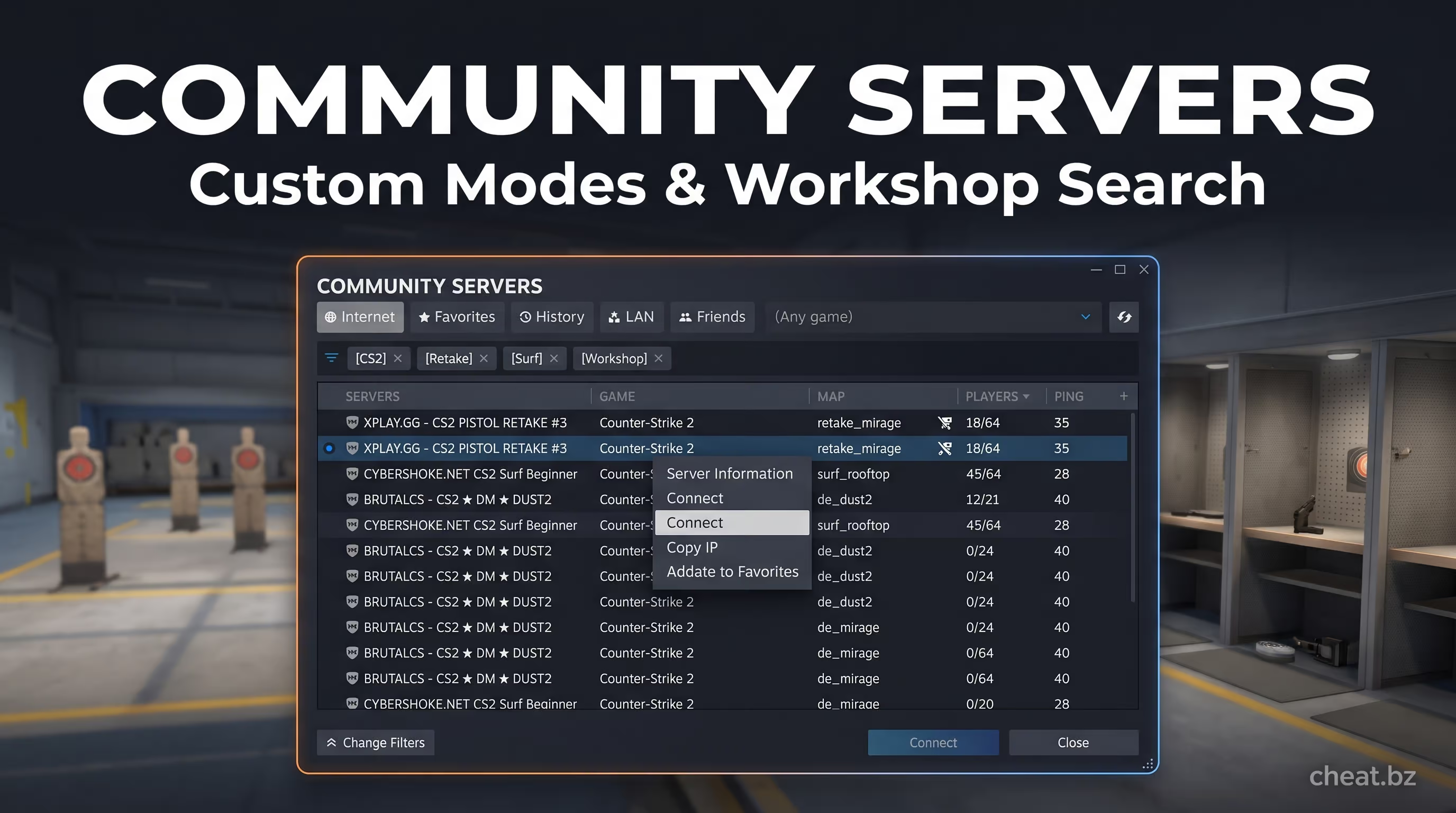
Community Servers and Workshop Maps
If official matchmaking has gone stale, community servers come to the rescue with dozens of different game modes and Workshop maps. With the major March 2026 update, Valve significantly improved custom mode integration.
Through the server browser, you can find legendary formats:
- Retake: Simulates a post-plant scenario. Practice retaking and holding bombsites.
- Surf and KZ: Modes that test your movement skills, bunny hopping, and air strafing.
- Aim Botz: Custom offline maps for warming up your flicks on stationary or moving targets.
- AWP Lego: The iconic sniper duels.
Which CS2 Mode Should You Pick? — Recommendations by Skill Level and Goals
To keep you from wasting time, we put together a simple cheat sheet for choosing the right tab:
| Your Goal | Recommended CS2 Mode |
|---|---|
| Quick hand warmup before a sweaty ranked game | Deathmatch or Workshop maps (Aim Botz) |
| Farming weekly drops (cases, skins) and XP | Competitive or Wingman (highest XP multipliers per round) |
| Practicing nade lineups and timings with a friend | Private matchmaking (Practice) |
| Having fun and decompressing after losses | Arms Race or Casual |
| Serious play for rating and esports | Premier |
Conclusion
The matchmaking architecture in CS2 has become far more logical. By separating the esports-focused Premier from classic Competitive, Valve gave players the freedom to drill weak maps without the fear of tanking their main rating. The golden rule — don't get stuck in one format. Rotate between focused DM for wrist warmups, custom Retake servers for timing reads, and Premier to put your potential to the test.
Now you fully understand the mechanics behind every mode. If you want to dive deeper into subtick configuration, config optimization, or learn how modern kernel-level anti-cheats actually work, head over to the technical guides on our blog. Good luck with your calibrations — may your ELO climb high!