

What Anti-Cheat Does in Games: Core Mechanics, Kernel Rings, and System Oversight
Twenty years ago, game developers only needed basic file checksum verification: legacy Valve Anti-Cheat (VAC) in CS 1.6 or PunkBuster in early Battlefield titles simply ensured no one tampered with game files on disk. Today, competitive online shooters are a high-stakes technological arms race. When an opponent lands 360-no-scope headshots or pre-fires your exact path through solid walls, a multi-layered detection pipeline triggers simultaneously across your client and the server. The team at private cheat marketplace cheat.bz breaks down exactly how modern anti-cheat works: what it scans in RAM, why it hooks into the Windows kernel, and how competitive gaming security migrated straight to motherboard silicon.
Key Takeaways
An anti-cheat is a specialized security framework designed to prevent unauthorized tampering with a game's process. It blocks unauthorized RAM reading and modification, flags abnormal input telemetry, and validates player physics on the server to preserve competitive integrity.
- Client-Side Layer (Ring 3 and Ring 0): User-mode software scans open windows and processes, while Windows kernel-level anti-cheat intercepts unauthorized memory access to the game process before instructions execute.
- Hardware Barriers: Competitive platforms like FACEIT enforce Secure Boot, TPM 2.0, and IOMMU hardware virtualization to isolate RAM against external PCIe DMA cards.
- Server-Side Filtering (Fog of War): The game server strips enemy coordinates behind solid obstacles from network packets, neutralizing wallhacks at the engine architecture level.
- Behavioral Analysis: Machine learning models evaluate hand micro-tremors, angular aim velocity, and click timing to detect subtle aim assistance without scanning local game files.
- Privacy Safeguards: Anti-cheat services only harvest technical module hashes, crash dumps, and hardware descriptors (HWID); personal documents, browsing history, and passwords are never scanned.
Below, we break down every layer of defense—from CPU privilege rings down to server tick rates.
Quick Answer: What Anti-Cheat Does Pre-Match
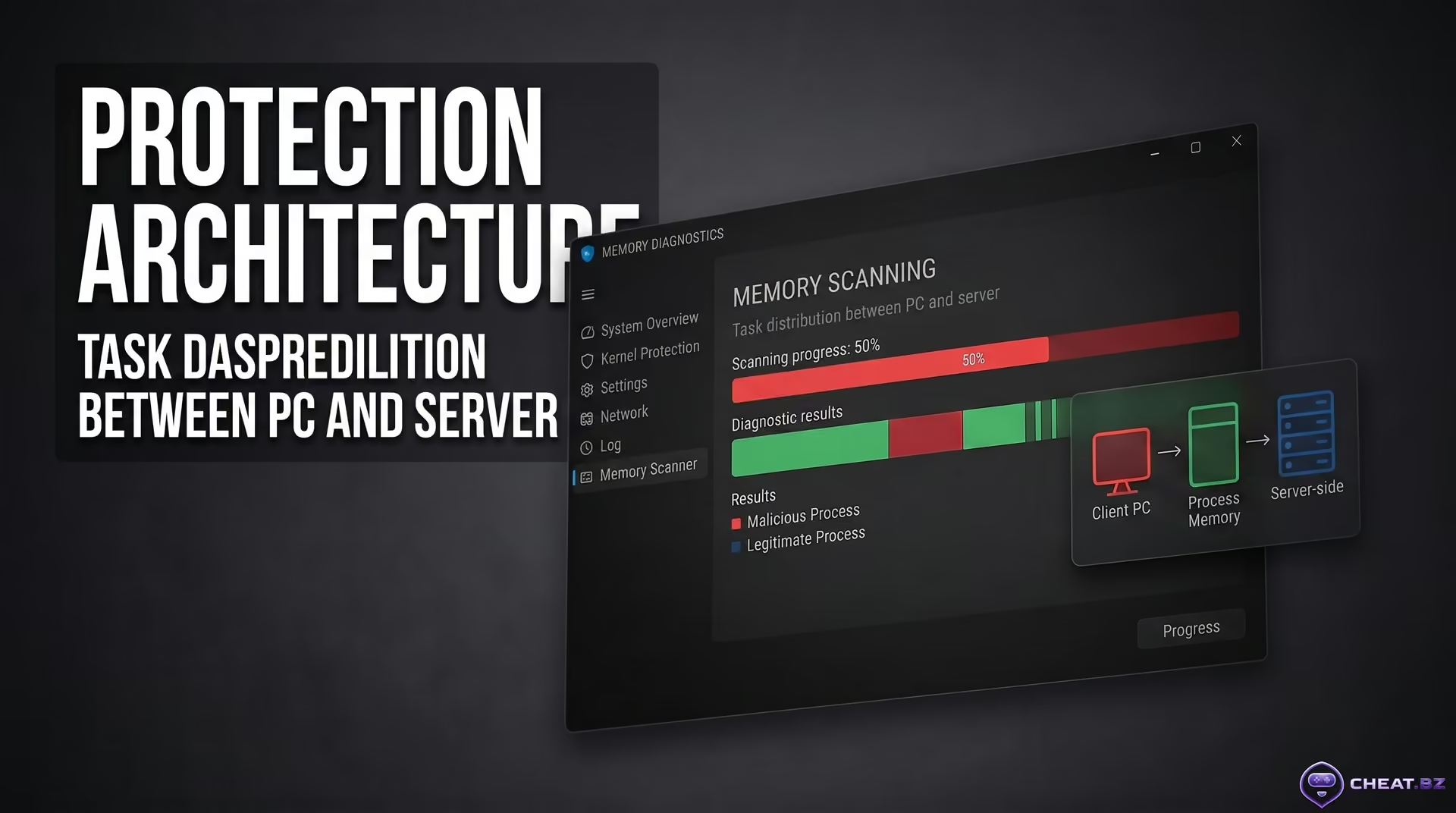
Before dropping a player into a server, anti-cheat executes an extensive system integrity check. It scans RAM for injected DLLs, validates digital signatures on loaded libraries, inspects active screen overlays, and pings the backend server to cryptographically verify trusted Windows integrity. What anti-cheat does in modern gaming comes down to a straightforward mandate: maintain an uncompromising barrier that stops cheats and prevents third-party code from hijacking match outcomes.
| Defense Layer | Execution Context | Detection Vector | Primary Objective |
|---|---|---|---|
| User-Mode (Ring 3) | User-space applications | Signature scanning and WinAPI hooks | Catch basic external scripts and primitive overlays |
| Kernel-Mode (Ring 0) | Windows kernel and system drivers | RAM page monitoring, kernel callbacks | Block rootkits and direct game memory access |
| Hardware Perimeter | PCIe bus, UEFI firmware, TPM module | Memory isolation via IOMMU, Secure Boot | Neutralize external DMA cards and custom bootloaders |
| Server Perimeter | Dedicated game server | Potentially Visible Set (PVS) and ML input models | Neutralize wallhacks and reject impossible physics |
Privilege Levels: Why Antivirus Falls Short and Ring 0 Matters
Standard antivirus software focuses on global Windows security: it hunts for trojans, ransomware, and spyware that corrupt or compromise operating system files. From the OS standpoint, game cheats don't damage Windows—they merely read bytes from an adjacent process window, often masquerading as benign overlay or hardware monitoring utilities. To stop this, dedicated client-side anti-cheats must intercept software activity at a much deeper operating system level.
The Anatomy of Privilege Rings: From Ring 3 Down to Ring -1
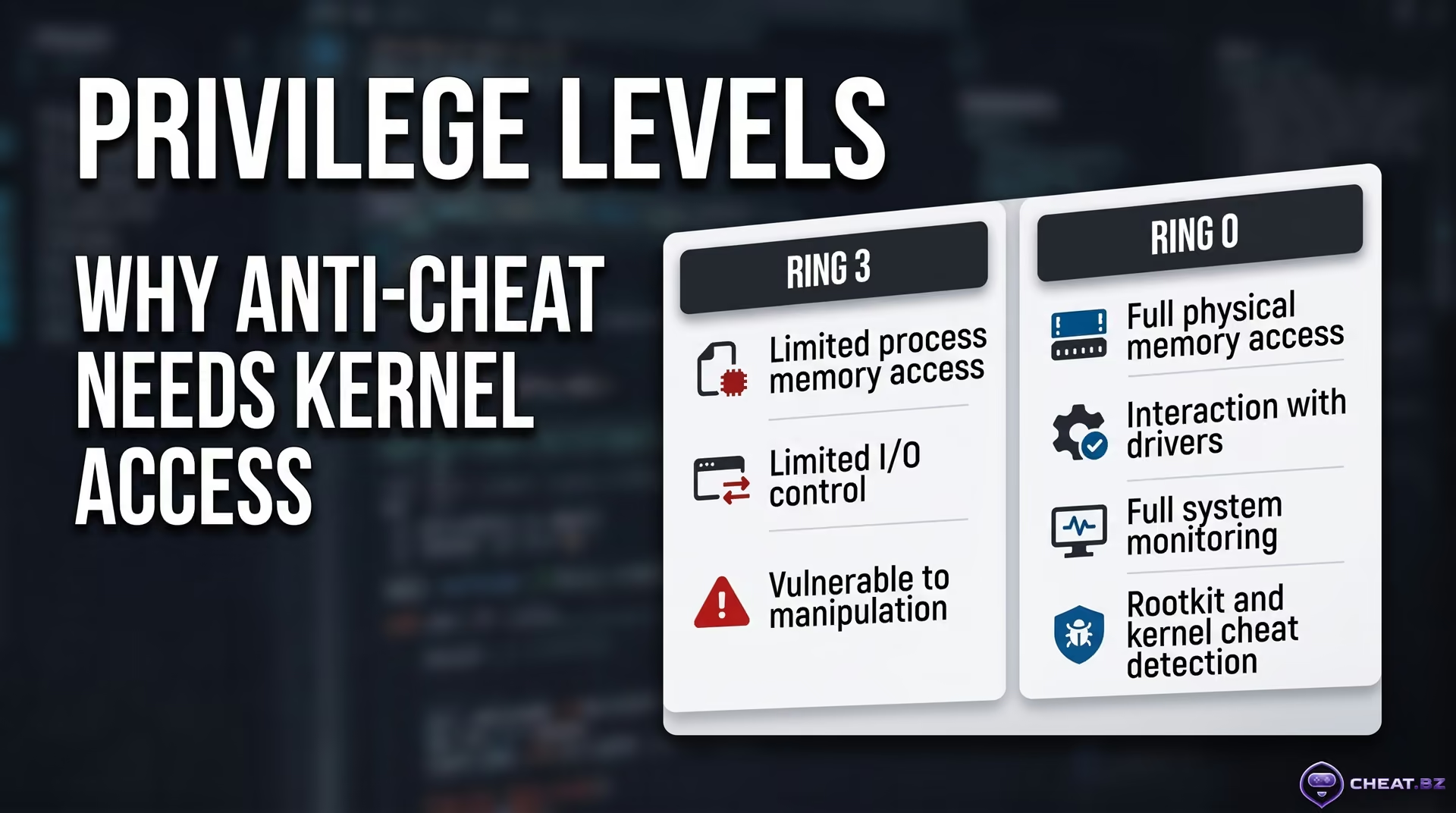
The x86-64 processor architecture organizes program privileges into hierarchical protection rings. Everyday user-mode applications—web browsers, Discord, Steam, and the game executable itself—run in Ring 3 (user space). Here, processes remain strictly sandboxed, with inter-process communication regulated by WinAPI functions such as ReadProcessMemory and OpenProcess.
When cheat software deploys via a custom driver in Ring 0 (kernel mode), it gains the highest execution privileges on the machine. A kernel driver can hide its execution threads from Task Manager and modify physical game memory directly. Standard Ring 3 applications cannot detect these modifications due to CPU-enforced privilege boundaries. To level this playing field, Easy Anti-Cheat (EAC), BattlEye, Riot Vanguard in competitive shooter Valorant, and the FACEIT client deploy proprietary kernel drivers (.sys modules). Running at Ring 0, the security driver uses ObRegisterCallbacks to install system-level filters, blocking unauthorized processes from opening handles to the game before memory access can occur.
Operating beneath Ring 0 is the hardware hypervisor layer (often called Ring -1), which powers core Windows security features like Virtualization-based Security (VBS) and Hypervisor-Protected Code Integrity (HVCI). These hypervisor layers isolate critical kernel structures inside secure virtualized environments, safeguarding the OS even if a Ring 0 driver is compromised.
BYOVD Attacks: Why Anti-Cheats Blacklist Legacy Drivers
By default, 64-bit Windows enforces Driver Signature Enforcement (DSE), blocking unsigned custom code from loading into Ring 0 without enabling test signing mode. Cheat developers bypass this restriction using BYOVD (Bring Your Own Vulnerable Driver) attacks. They bundle legitimate, Microsoft-signed, but inherently vulnerable legacy drivers (such as older RGB controller software or GPU overclocking utilities) and exploit their known security flaws to execute unsigned code directly in the kernel.
To eliminate the BYOVD attack vector, anti-cheat clients continuously cross-reference loaded kernel modules against a global Driver Blocklist. If the system detects a blacklisted or vulnerable driver, the game refuses to launch, keeping the memory perimeter locked down.
Client-Side Mechanisms: How Systems Detect Memory Tampering
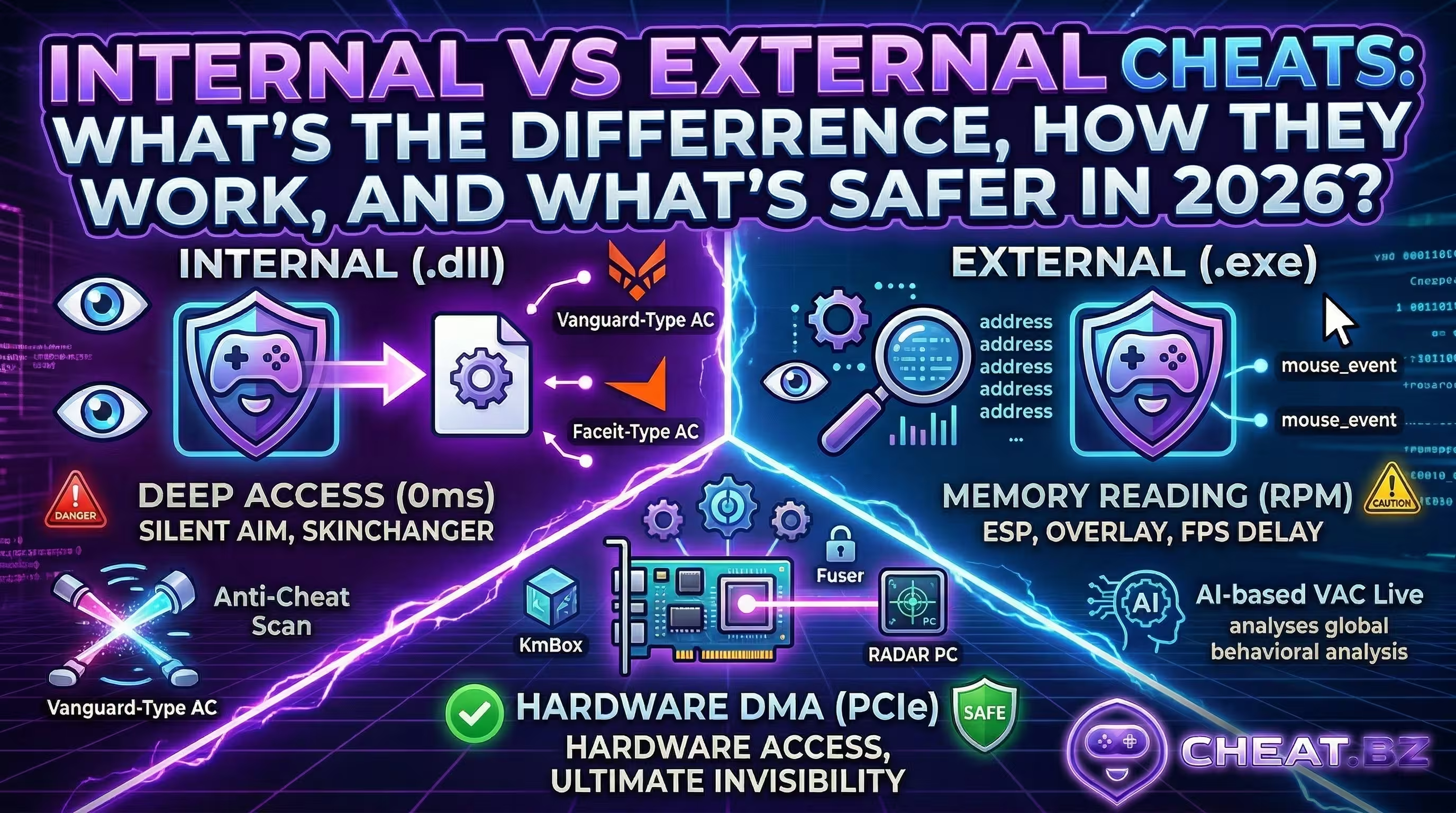
On the client side, anti-cheat functions as a continuous integrity monitor. Modifying in-game variables—such as player coordinates, ammunition, or view angles—requires write access to virtual memory space. While we explored the technical differences between execution vectors in our guide on Internal vs. External cheats, modern security engines actively hunt both injection methodologies.
Virtual Address Space Scanning and Injection Detection
Client-side RAM monitoring relies on four primary detection techniques:
- RAM Page Permission Auditing: The game's compiled binary executes inside memory pages marked strictly as execute-read (
PAGE_EXECUTE_READ). If an injector callsVirtualProtectExto flip page rights toPAGE_EXECUTE_READWRITEto patch game code, it immediately trips kernel detection. We detailed the operational risks of these vectors in our breakdown of DLL injectors for cheats. - Import and Export Address Tables (IAT/EAT): Direct3D frame rendering and network communication route through standard system tables. Anti-cheat scans these pointers to detect foreign function hooks placed to render wallhack overlays or intercept packets.
- Execution Thread Inspection (ETHREAD): By crawling the Virtual Address Descriptor (VAD) tree, the anti-cheat flags any active thread executing instructions from unbacked, unmapped memory outside legitimate game DLLs.
- Signature Scanning: Real-time heuristic scanning of memory ranges against databases of known cheat signatures. Unique byte patterns instantly identify compiled public modules.
Telemetry and Machine Learning: Human Input Detection
When memory access remains completely hidden, player input kinematics tell the rest of the story. Human hands cannot track a target in an absolute straight line without natural micro-tremors and biological correction delays.
Machine learning engines—Valve's VACnet in Counter-Strike 2 (CS2), Call of Duty's Ricochet, and FACEIT's proprietary input heuristics—process raw mouse telemetry in real time. The neural network computes angular rotation speeds, micro-tremors, and click latencies. When a crosshair snaps to an enemy hitbox in a single tick or locks onto an entity through impenetrable surfaces without human reaction delays, behavioral telemetry flags the profile for automated review.
Hardware Barriers: DMA Defense, TPM 2.0, and Secure Boot
As kernel-level detection evolved, cheat developers attempted to isolate cheat execution from the gaming PC altogether using Direct Memory Access (DMA) hardware. Security engineers countered by shifting integrity verification directly to motherboard controllers and UEFI firmware.
How PCIe DMA Cheats Work and How IOMMU Neutralizes Them
A DMA card installs directly into an open PCI Express slot on the host gaming PC and connects to a secondary PC via high-speed USB or fiber optic cable. The card reads system RAM over the PCIe bus without routing through the CPU or Windows, relaying an enemy radar overlay to a secondary monitor. The primary gaming rig runs completely vanilla software with no third-party processes active.
To close this hardware loophole, modern anti-cheats enforce hardware I/O virtualization: Intel VT-d and AMD-Vi (IOMMU). Through DMA Remapping, the memory controller isolates the PCIe bus, blocking plugged-in expansion cards from reading physical memory ranges allocated to the game. Operating safely in this environment requires specialized DMA card custom firmware that emulates legitimate enterprise network adapters or audio cards.
The Immutable Root of Trust: Cryptographic Security via TPM 2.0 and Secure Boot
To prevent tampered Windows kernels and custom hypervisors from initializing, competitive titles enforce hardware trust baselines:
- UEFI Secure Boot: The secure boot protocol verifies cryptographic signatures across all pre-boot binaries, ensuring untrusted bootkits cannot hijack the operating system before the security driver loads.
- TPM 2.0 Security Module: The hardware cryptoprocessor stores immutable platform keys and measures boot-chain integrity (Platform Attestation). If the OS boots in test mode or under a kernel debugger, the TPM refuses to issue integrity certificates, and the anti-cheat terminates the session.
Server-Side Validation: Authoritative Physics and Fog of War Against Wallhacks
The strongest line of defense sits on the developer's server. An authoritative game server doesn't need to scan client files: it dictates the ground truth of the game world and rejects impossible client actions by design.
Network Fog of War: Why Game Clients Don't Know Enemy Positions
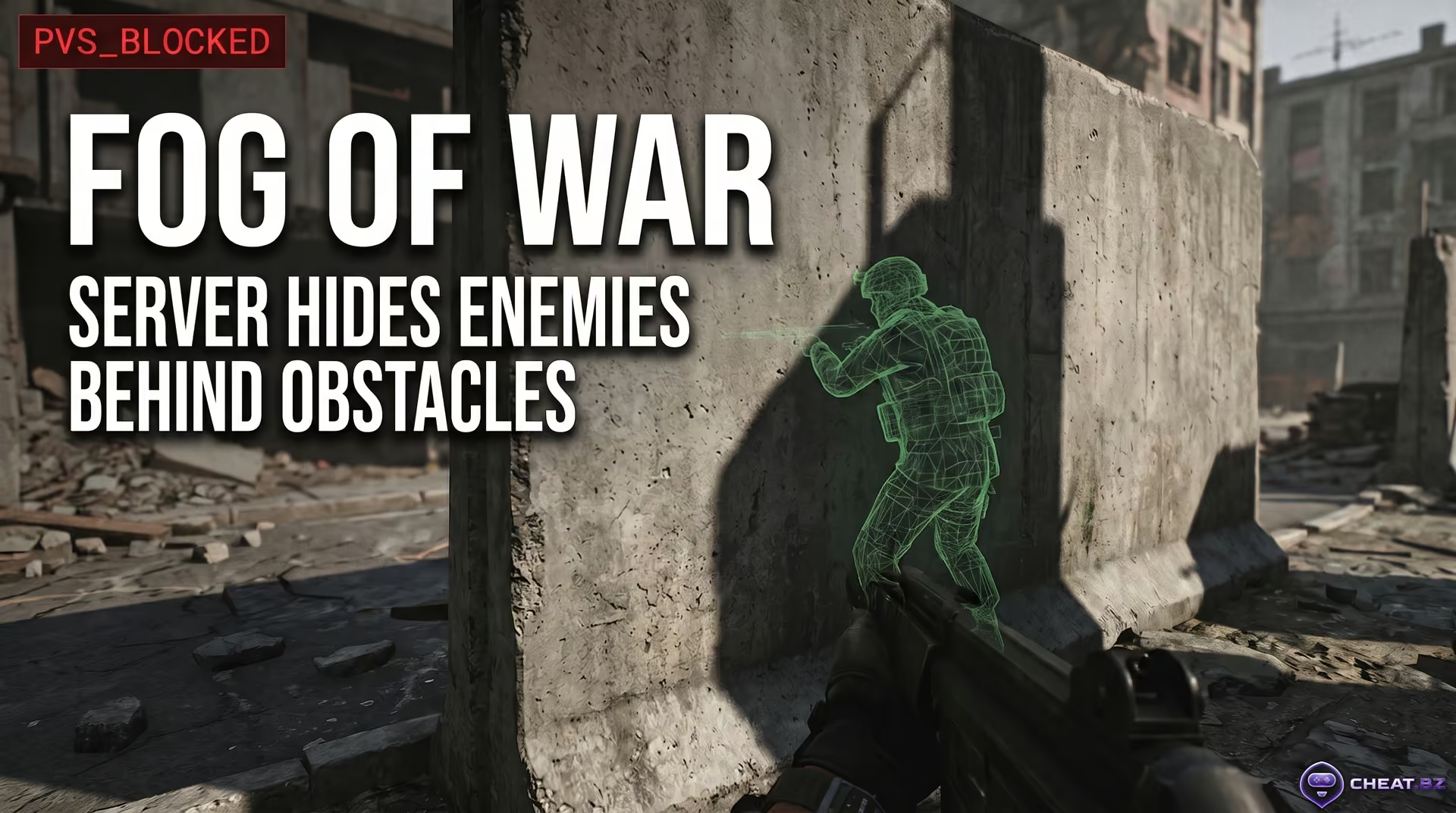
The most definitive way to kill wallhacks is simple: never send extraneous player data to the client. This architectural approach is known as network Fog of War or Potentially Visible Set (PVS) calculation.
The server calculates line-of-sight between all players based on map geometry. If an opponent sits behind a solid concrete wall, the server strips their coordinates, velocity, and health data from outgoing network packets. Positional data streams to your client only milliseconds before the enemy crosses into view. Because enemy coordinates do not exist in local RAM, wallhack overlays have nothing to render.
Server-Side Physics Validation
The client never reports confirmed hits or final positions—it only sends timestamped user inputs. The authoritative server evaluates every action independently:
- Movement Checks: The server tracks distance traveled between server ticks against maximum player move speeds. Attempting to speedhack results in immediate server-side position correction (rubberbanding).
- Ballistics and Hit Registration: The server reconstructs bullet trajectories accounting for recoil, spread, and world geometry. If a bullet path intersects world geometry, the server voids the damage.
- Action Rate Limiting: The server measures firing intervals, discarding packet bursts that exceed the weapon's hardcoded rate of fire.
Enforcement and Bans: Why Cheaters Aren't Banned Instantly
Instant, mid-match bans directly benefit cheat developers: immediate feedback reveals the exact hook, injection method, or signature that tripped detection, allowing developers to patch their software within hours. To disrupt this feedback loop, anti-cheat operators rely on scheduled ban waves.
Ban Waves as Countermeasures Against Cheat Developers
When an account trips detection, the server silently flags the profile without alerting the user. The player continues through normal matches while telemetry collects data, until the publisher purges thousands of flagged accounts in a coordinated wave. This leaves cheat developers in the dark regarding what triggered the detection and exposes them to mass refund requests from their customer base.
HWID Ban Mechanics: How Hardware Identifiers Blacklist Systems
In free-to-play titles, account bans do little to deter repeat offenders who can register new profiles in seconds. Permanent enforcement relies on HWID bans (Hardware Identification bans).
The security client pulls unique factory hardware descriptors across the system:
- Physical drive serial numbers (NVMe SSDs and SATA HDDs);
- Motherboard UUID and SMBIOS hardware tables;
- Network interface MAC addresses;
- Cryptographic hardware certificates embedded in the TPM 2.0 chip.
These telemetry points are hashed and permanently blacklisted on authentication servers. Reinstalling Windows or wiping drives will not clear the ban—any new account logged into that machine gets banned automatically. To protect underlying hardware setups from permanent blacklisting, players use a dedicated PC HWID Spoofer that virtualizes component serials before the game client initializes.
Privacy and Stability: What Anti-Cheat Sees and Can It Trigger BSODs?
Running software in Ring 0 naturally sparks concerns regarding privacy overreach and system stability (BSODs). Let's separate technical facts from speculation regarding data harvesting and Windows stability.
Data Separation: Technical Telemetry vs. Personal Information
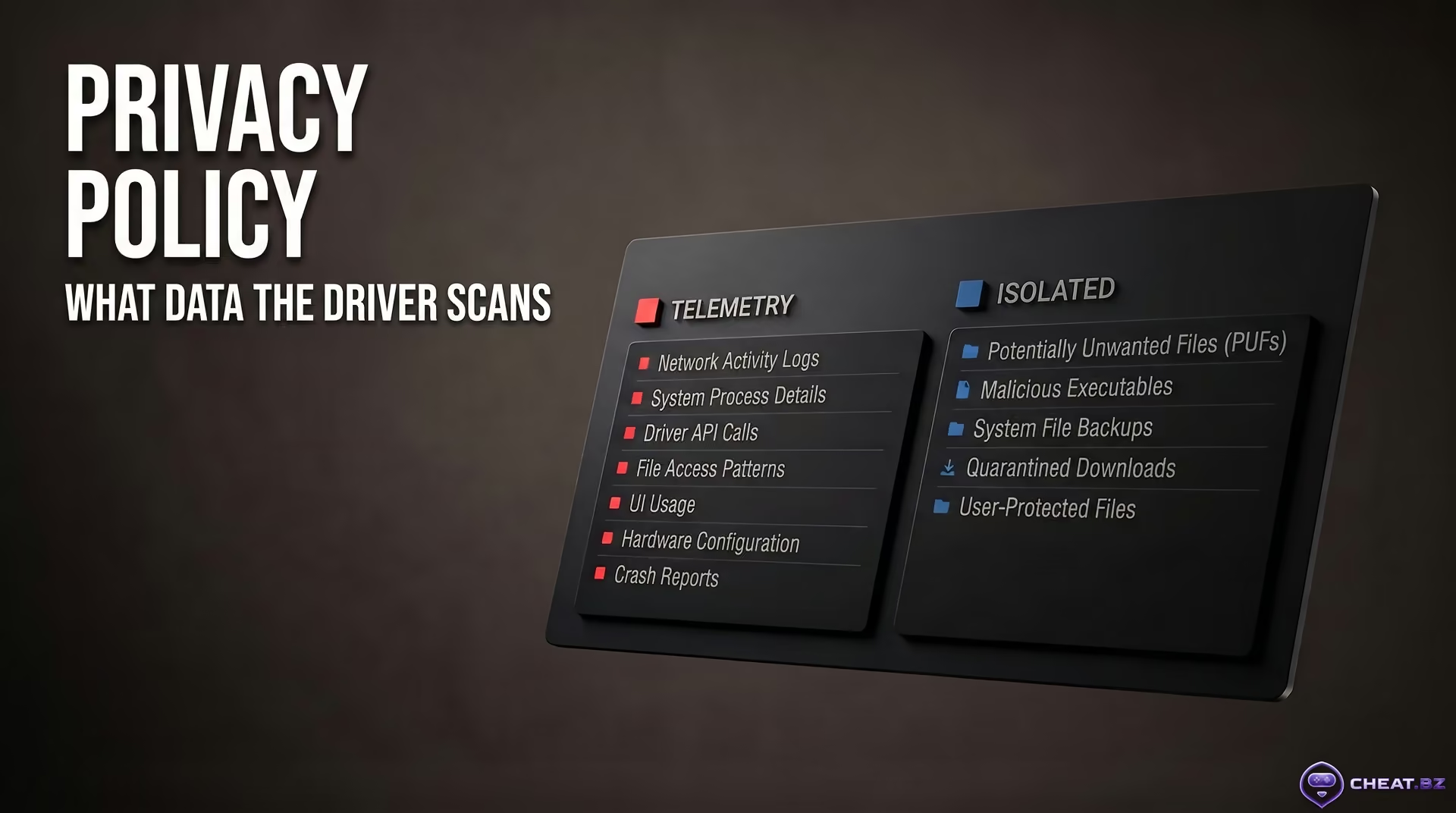
Strict international privacy regulations (such as GDPR) and network performance constraints strictly limit what anti-cheat drivers harvest. Sending arbitrary user files would cripple publisher server infrastructure without providing useful detection data. Anti-cheat telemetry focuses strictly on operational parameters:
- Cryptographic hashes (MD5/SHA-256) of active executable modules;
- Enumerated lists of loaded Windows kernel drivers;
- Hardware identity fingerprints (HWID);
- Active call stacks and memory dumps generated during game crashes;
- Flagged WinAPI hook attempts and unauthorized handle requests.
Private chat logs, saved browser passwords, search history, and personal photos are never scanned or harvested. Telemetry analysis is strictly confined to memory regions directly interacting with the game client.
Vanguard On-Demand (2026): Balancing Security and Background Overhead
A major criticism of Riot Vanguard was its requirement to run continuously in the background from boot. As of mid-2026, Windows 11 systems running active VBS, HVCI, and TPM 2.0 utilize Vanguard On-Demand. The kernel driver loads strictly when launching the game and unloads immediately upon exiting, eliminating background CPU cycles and lowering system DPC latency.
Troubleshooting Crashes: Resolving Driver and System Conflicts
Because anti-cheat drivers operate inside kernel space, unhandled memory exceptions or outdated third-party modules can trigger a Blue Screen of Death (BSOD). Here is a step-by-step diagnostic workflow to resolve common system conflicts.
Fixing the 'Forbidden Driver' Error
If your game crashes on launch pointing to a blocked .sys file:
- Note the exact driver filename cited in the error prompt (frequently legacy RGB software components like
ene.sysor legacy fan controllers). - Uninstall the corresponding legacy utility through Windows Installed Apps.
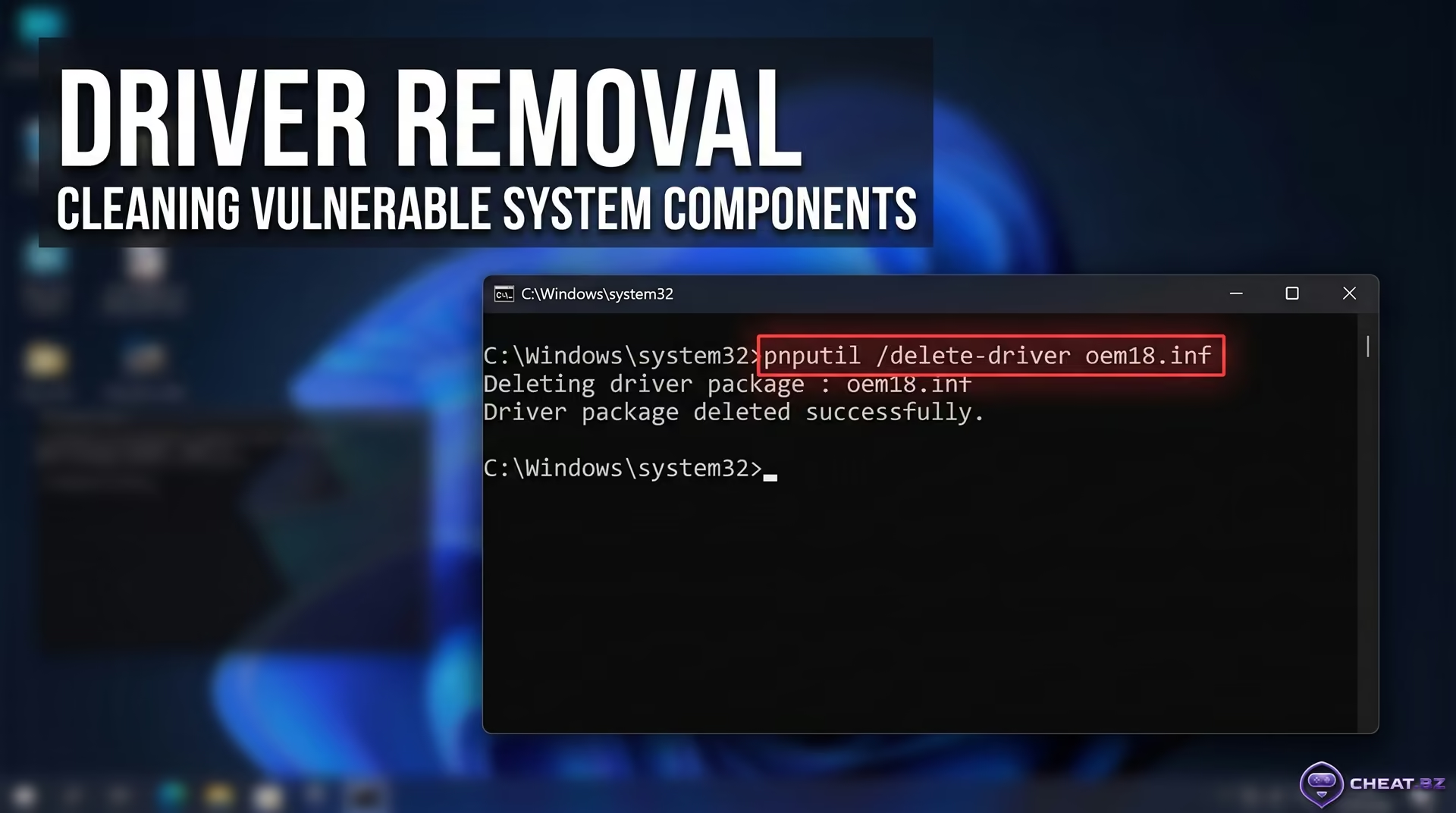
- To permanently remove orphaned driver packages from the Driver Store, launch an Administrator Command Prompt and query third-party drivers:
pnputil /enum-drivers - Locate the matching published INF name (e.g.,
oem18.inf) and force-delete the package:pnputil /delete-driver oem18.inf /uninstall /force
Configuring a Trusted Boot Environment
To meet competitive anti-cheat integrity checks, ensure your operating system runs in standard trusted configuration:
- Disable Test Signing Mode: An active test mode blocks competitive matchmakers. Disable it via an Administrator Command Prompt:
Restart your PC immediately after running the command.bcdedit /set testsigning off - Verify Operating System File Integrity: Restore corrupted core system files with a native scan:
sfc /scannow - Enable Hypervisor-Protected Code Integrity (HVCI): Navigate to Windows Settings → Privacy & Security → Device Security → Core Isolation, and toggle Memory Integrity to 'On'. Note: Windows kernel drivers (
.sys) cannot execute natively through Proton on Linux or SteamOS. Games featuring EAC or BattlEye run on Steam Deck only because developers supply dedicated native Linux user-space runtimes; full kernel-level drivers like Vanguard or FACEIT cannot function on Linux.
Conclusion
Modern anti-cheat is a distributed engineering framework spanning low-level kernel drivers, CPU virtualization protocols, authoritative server-side physics, and machine-learned input telemetry. Understanding these interconnected systems demystifies common privacy concerns and makes troubleshooting launch conflicts straightforward. To explore network netcode, Windows performance tuning, and shooter engine mechanics further, check out our other technical guides on the cheat.bz blog and browse available software in the cheat.bz games catalog.